
What Is Gold Vine Tutoring? A Family’s Guide to Individualized Academic Support

When your child begins struggling in school, it can be difficult to know what kind of help they actually need.
Maybe homework has become a nightly battle. Your child may understand a concept one day and feel completely lost the next. You hear from their teachers that "they just need more practice", but no one has clearly explained which skills are missing or where to begin.
For many families, tutoring becomes another item on a growing list of things to figure out. Will the tutor simply help finish homework? Will your child receive support at the right level? How will you know whether the sessions are helping?
Gold Vine Tutoring gives elementary and middle school students individualized, one-on-one support in reading, English, and math. Our goal is not only to help children complete the work in front of them, but to help students strengthen the underlying skills they need to move forward with greater confidence and independence.
What Is Gold Vine Tutoring?
Gold Vine Tutoring provides focused academic support based on the individual student—not only their grade level, current assignment, or latest test score.
Two children can struggle with the same subject for very different reasons. A student having difficulty with reading comprehension may need help understadning vocabulary or a clear strategy for identifying important information in a passage.
A student struggling in math may need support with basic facts, multi-step problems, or understanding the language used in word problems.
Effective tutoring starts by looking beneath the assignment and asking:
- Which skills does this student already understand?
- Where does learning begin to break down?
- What foundation needs to become stronger?
- Which teaching approach helps this child understand the material?
- How can we help the student use these skills more independently?
This allows tutoring sessions to address the reason behind why schoolwork is difficult instead of repeatedly working around the same gaps.
More Than Homework Help
Homework can provide useful information about what a student is learning and where they are getting stuck. However, completing tonight’s worksheet does not always prepare a child for tomorrow’s lesson.
A child can finish an assignment with extensive adult help and still feel unsure when asked to complete similar work independently. Over time, the student begins to believe they are “bad at math,” or “not a good reader."
Gold Vine Tutoring looks beyond just getting the correct answer.
We help students understand how to approach a task, choose a strategy, and work through uncertainty.. When students build these skills, they become better prepared to manage new material rather than depending on someone to guide them through every question.
Homework support is still be part of a session when it connects to the student’s goals. The larger purpose, though, is to build skills that continue helping the child after the assignment is turned in and when tutoring eventually ends.
Who Does Gold Vine Tutoring Serve?
Gold Vine currently offers tutoring for elementary and middle school students who need support in reading, English, or math.
Tutoring can help a child who:
- Has fallen behind in a particular subject
- Understands some parts of the material but has important skill gaps
- Needs concepts explained in a different way
- Becomes frustrated or overwhelmed during schoolwork
- Relies heavily on an adult to begin or complete assignments
- Has difficulty remembering or applying previously taught skills
- Needs additional practice outside the classroom
- Would benefit from rebuilding confidence after repeated academic struggles
- Needs a stronger foundation before moving into more advanced material
A child does not need to be failing a class before tutoring can help. In fact, they should get help long before that point. Early intervetion strengthen's developing skills before frustration grows and learning get harder.
What Subjects Does Gold Vine Offer?
Gold Vine provides one-on-one tutoring in reading and English language arts, as well as math.
Reading and English
Reading is not one skill. It involves several connected abilities that develop over time. Depending on the student’s age and current needs, tutoring may focus on:
- Letter sounds and phonics
- Decoding unfamiliar words
- Recognizing common words
- Reading accuracy and fluency
- Vocabulary development
- Understanding what was read
- Finding the main idea and supporting details
- Making inferences
- Organizing written responses
- Grammar, sentence structure, and writing skills
A student who dislikes reading doesn't necessarily dislike books or learning. From the child's viewpoint, reading may simply requires so much effort that little energy remains for understanding or enjoying the material. By identifying the point where reading becomes difficult, we focus instruction where it will make the greatest difference.
Math
Math skills build on one another. When an earlier concept remains unclear, each new lesson becomes more confusing.
Math tutoring may address:
- Number recognition and number sense
- Addition, subtraction, multiplication, and division
- Math fact fluency
- Place value
- Fractions and decimals
- Measurement
- Multi-step calculations
- Word problems
- Pre-algebra concepts
- Choosing and applying problem-solving strategies
The goal is for children to recognize what a problem is asking, select an appropriate strategy, and explain how they reached an answer.
What Makes Tutoring Individualized?
Students do not all learn at the same pace or respond to the same explanations.
One child will understand a concept after seeing a visual example. Another needs hands-on practice. Some students benefit from breaking a skill into very small steps, while others understand the individual steps but need help putting them together.
Individualized tutoring gives the tutor time to slow down, notice where confusion begins, and adjust the instruction during the session.
This also means we do not assume that a child’s grade tells us everything about their current needs. A middle school student may need to revisit an earlier math skill before working on grade-level equations. An elementary student may understand a story when it is read aloud but need targeted help reading the same material independently.
Returning to a foundational skill is not moving backward. It gives the student something solid to build on.
How Does Gold Vine Tutoring Work?
Every student begins in a different place, so tutoring should not follow one identical plan for every child.
We learn about your child
Before sessions begin, we want to understand what your child is experiencing.
Parents share current concerns, school feedback, subjects that cause frustration, skills the child handles successfully, and the type of support they have already received. This gives us a clearer picture of the student as a learner—not only a list of grades or test results.
We identify priority skills
Tutoring works best when the goal is more specific than “get better at math” or “improve reading.”
We narrow the focus to the skills creating the greatest difficulty. For one student, that could mean decoding unfamiliar words. For another, it could mean understanding fractions, organizing a paragraph, or solving a multi-step problem without becoming lost.
Clear priorities help sessions stay focused and allow families to understand what their child is working toward.
We provide one-on-one instruction
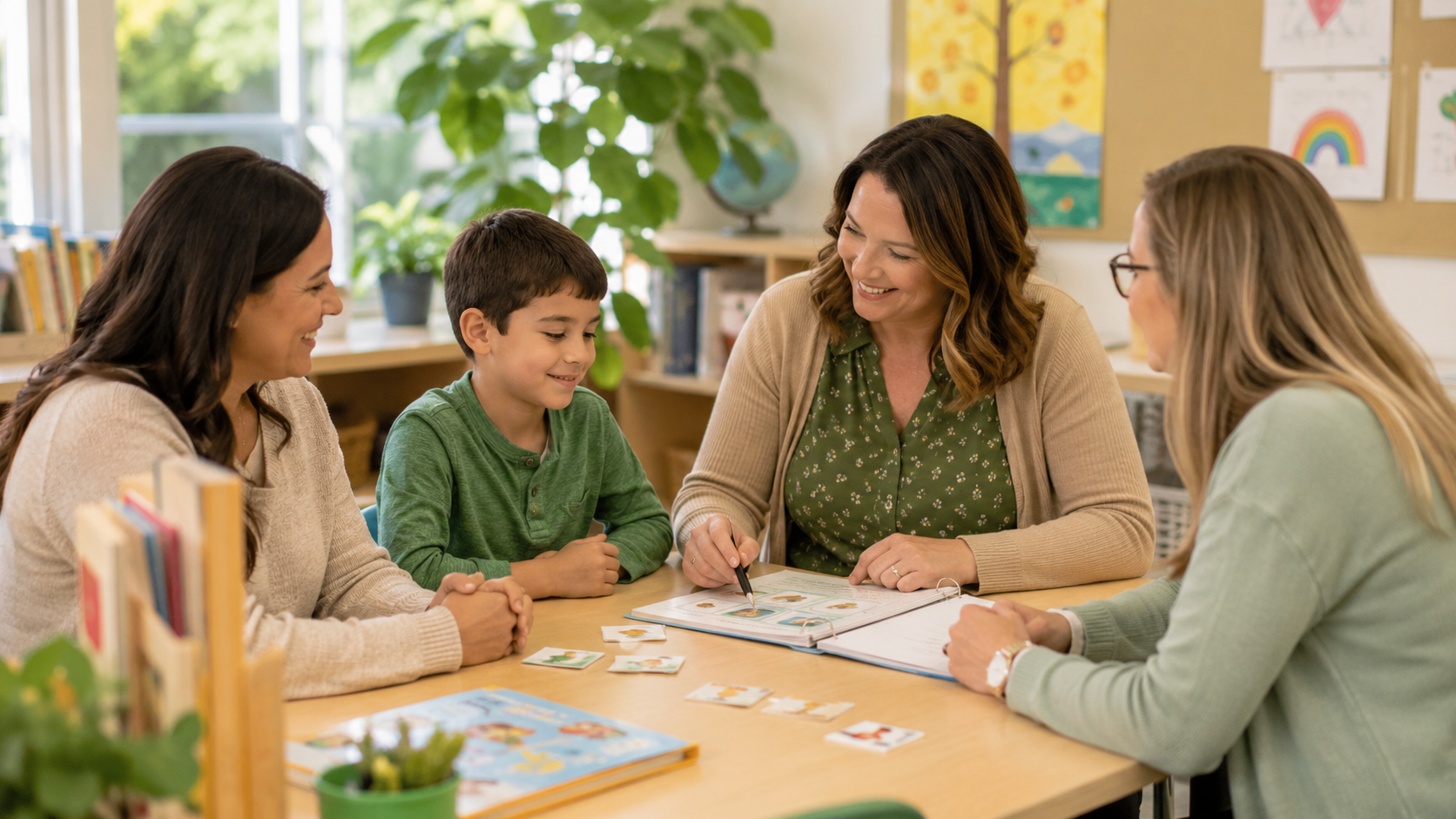
Gold Vine tutoring sessions are one-on-one, giving the student direct support throughout the session.
The tutor often will explain a concept, observe the student attempting it, respond to confusion, and adjust the level of help as needed. The child has room to ask questions without feeling rushed or embarrassed in front of a group.
One-on-one sessions also make it easier to balance instruction with practice. The student receives help when a skill is new, then gradually takes on more of the work as understanding grows.
We build toward independence
Good tutoring will not make a child dependent on a tutor.
At first, a student may need examples, reminders, and guided practice. As the skill becomes stronger, that support will begin to fade. This is a popular psycholody principle called 'scaffolding' and is extremely effective in helping learners gain greater independence.
In general, we want students to learn how to:
- Read directions carefully
- Identify what a question is asking
- Choose a strategy
- Break a larger task into manageable steps
- Check their own work
- Ask a specific question when they need help
- Continue after making a mistake
- Recognize what they can complete independently
These abilities support academic progress, but they also help children become more capable and confident learners.
Why Confidence Matters
Academic struggles rarely stay confined to a worksheet.
A student who repeatedly gets stuck will often begin avoiding the subject, rushing through assignments or waiting for an adult to take over. Some children would rather say they do not care than risk trying and getting the answer wrong.
Confidence does not come from telling a child that the work is easy. It grows when the child receives the right level of support and begins recognizing, “I know how to start this.”
That does not mean every assignment will become easy or that frustration will disappear. It means the student has stronger tools for working through challenges. At Gold Vine, we want children to experience success they can understand and repeat. Instead of only praising a correct answer, we can help the student notice what led to it:
“You slowed down and read the whole question.”
“You used the strategy we practiced.”
“You caught that mistake when you checked your work.”
“You did the first part on your own before asking for help.”
These moments help children connect effort and strategy with progress.
In-Person and Virtual Tutoring Options
Gold Vine offers both in-person and virtual tutoring options, allowing families to choose the format that works best for their child and schedule.
In-person tutoring can include direct instruction, written practice, visual examples, and hands-on learning materials. Most students benefit from meeting face-to-face in a separate learning environment with fewer distractions.
Virtual tutoring provides live, one-on-one instruction from home. The tutor can explain concepts, review work, model strategies, and guide the student through practice in real time. Virtual sessions can also provide greater flexibility for families who do not live near an in-person location or need tutoring to fit more easily into their weekly schedule.
The right format depends on the student’s learning style, ability to participate, current needs, and family routine.
What Is the Parent’s Role?
Parents should not have to wonder what happens during tutoring or whether the work connects to their concerns.
Families play an important role by sharing what they notice at home, providing updates from school, and asking questions about their child’s progress. A parent may notice that reading homework takes less time, the child begins attempting math without immediately asking for help, or frustration continues in a particular area.
That information matters.
At the same time, tutoring should not create an additional teaching job for the parent. Families can reinforce selected skills or routines at home, but parents should not feel responsible for recreating an entire tutoring session at the kitchen table.
Our role is to provide focused instruction and clear guidance so families understand what their child is learning and how they can offer realistic support.
Does Tutoring Replace Classroom Instruction?
Tutoring does not replace school or duplicate an entire school day.
Classroom teachers introduce grade-level material, manage the needs of many students, follow curriculum requirements, and keep lessons moving. Even with a dedicated teacher, due to the nature of large classtooms there often isn't enough time to revisit every unfinished skill or explain a concept several different ways.
Tutoring gives the student additional time and individualized attention.
It will reinforce classroom learning, address foundational gaps, provide targeted practice, and help the child approach schoolwork with stronger strategies. When appropriate, current classroom material helps guide sessions, but Gold Vine's tutoring remains focused on the student’s broader development rather than one assignment or test.
How Will We Know Whether Tutoring Is Helping?
Progress does not always appear first as a dramatic change in a report card.
Very often the earliest signs of progress are smaller:
- The student begins work with less hesitation
- Reading is smoother
- The child needs fewer reminders
- Homework causes less frustration
- A previously confusing concept begins to make sense
- The student starts checking their own work
- They ask more specific questions
- They attempt a problem before requesting help
- Skills begin carrying into new assignments
Academic performance matters, but so does the way a child approaches learning.
As tutoring continues, goals and instruction should reflect the student’s progress. Skills that become stronger need less direct support, while new priorities can receive more attention.
The purpose is not to keep a child in tutoring indefinitely. It is to build a stronger academic foundation and help the student use their skills with increasing independence.
How Do Families Begin Gold Vine Tutoring?
The first step is to contact Gold Vine and tell us a little about your child’s needs.
During the initial consultation, families will discuss what they have noticed and ask and answer questions so we get a holistic view of the situation.
From there, we will determine the next steps and develop a tutoring plan that reflects the student’s current needs.
You do not need to have every difficulty figured out before contacting us. Many parents know that something is not working but are unsure whether the problem involves reading, missing foundational skills, confidence, or a combination of several factors.
Academic Support That Helps Students Move Forward
Children deserve more than repeated reminders to try harder.
When a student struggles, the right support will help uncover what is getting in the way and strengthen the skills beneath the difficulty to make learning feel more manageable.
Gold Vine Tutoring provides meets students no matter where they are, teaches skills in a way that makes sense to them, and will help them become more confident and independent as learners.
The goal is not just to get through the next assignment, but to give your child a stronger foundation for everything that comes next.
Ready to learn more about Gold Vine Tutoring? Contact our team to discuss your child’s academic needs, tutoring options, and the next steps for getting started.
Where Every Family’s Journey Takes Root.
Continue exploring
Browse additional resources, practical guidance, and educational content related to ABA therapy, child development, and family support.
What Is Gold Vine Tutoring? A Family’s Guide to Individualized Academic Support

Gold Vine Parent Circle: Monthly Guidance and Personalized Family Support
School Consultation and Advocacy Support for Families
Get the support your family needs
Take the first step toward personalized care, clear guidance, and meaningful progress for your child.
.svg)
.svg)